Completing a New-Build Façade Where Access Is Limited

Rope Access Façade Cleaning New Zealand
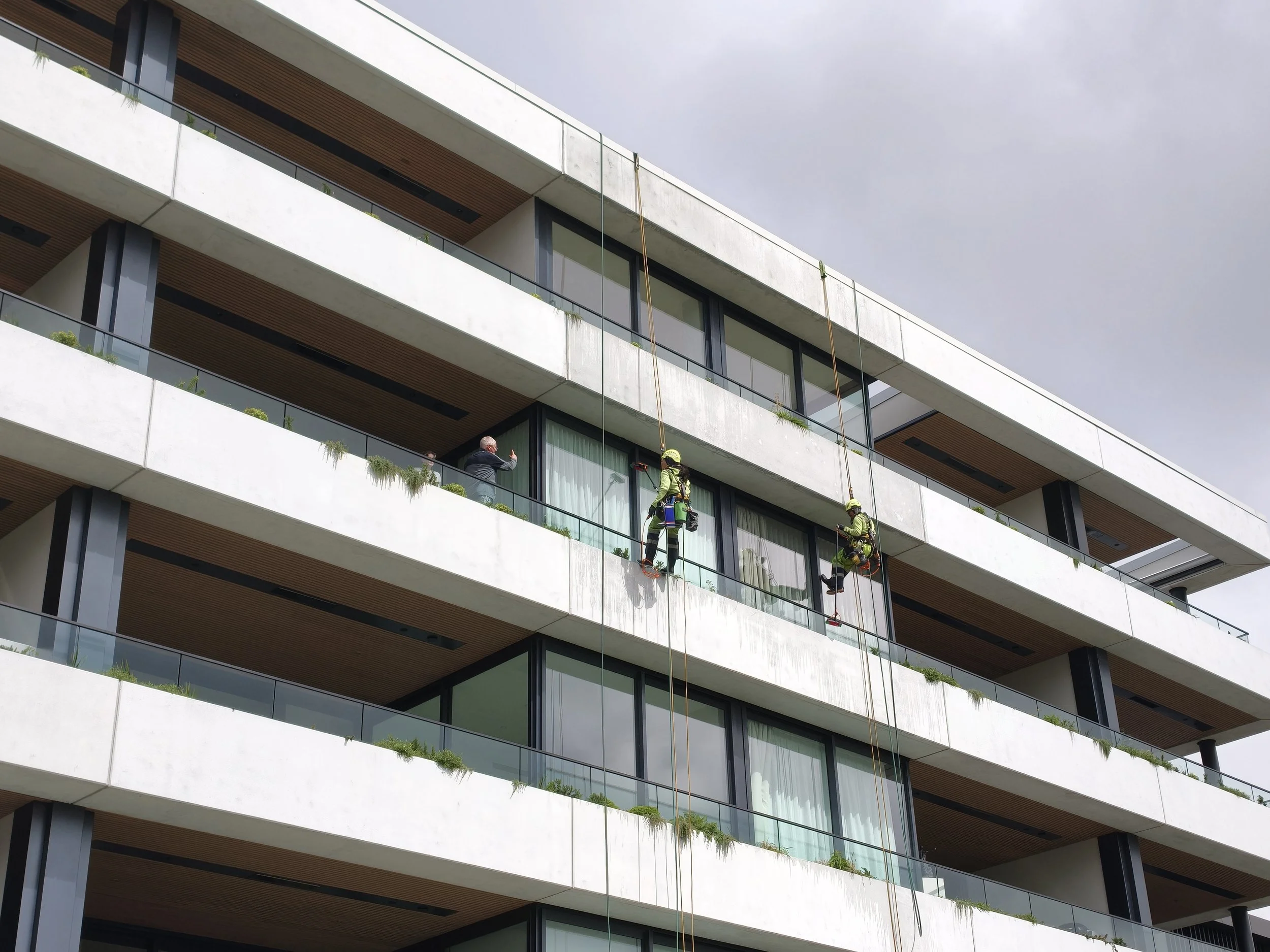
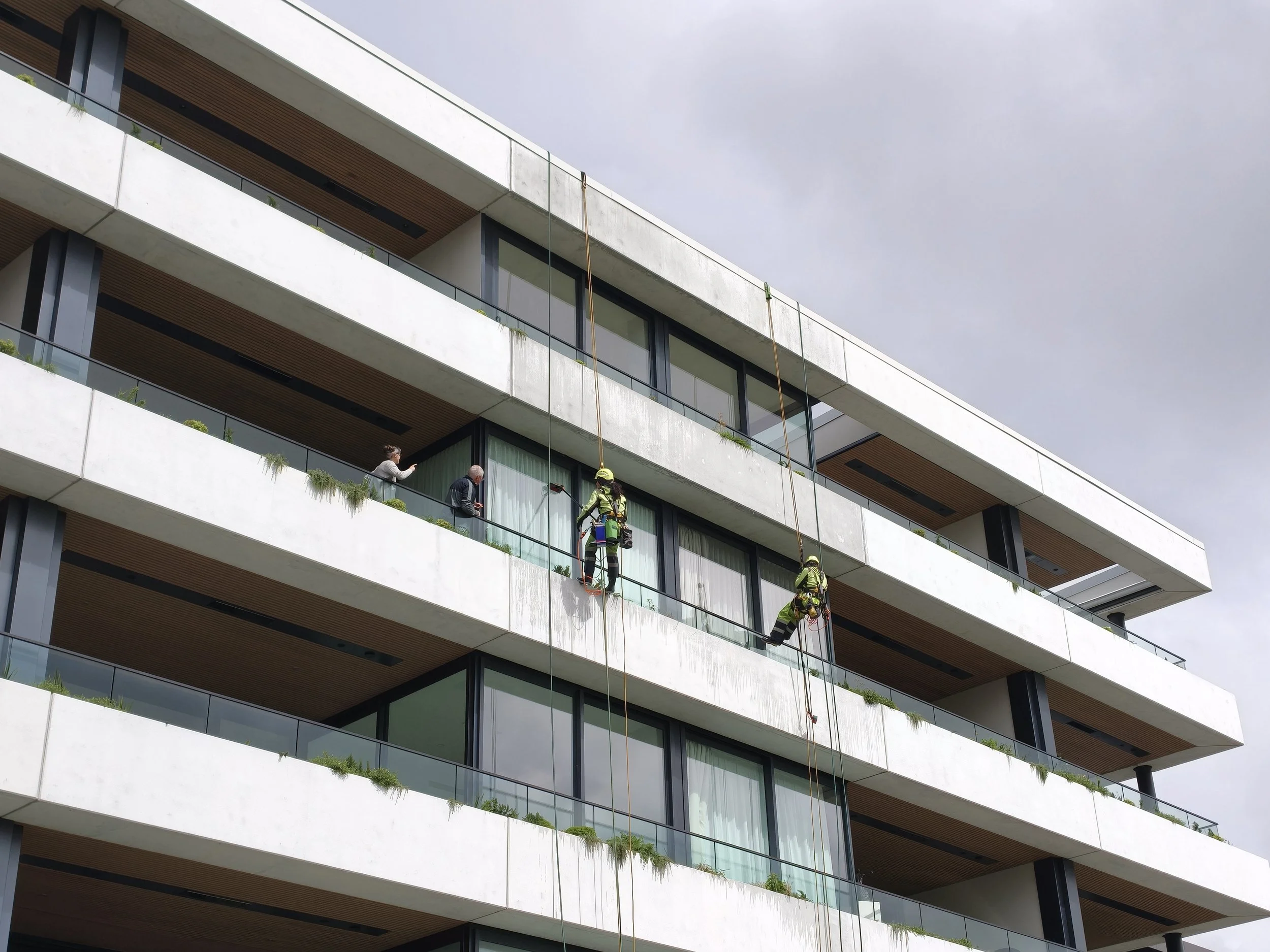
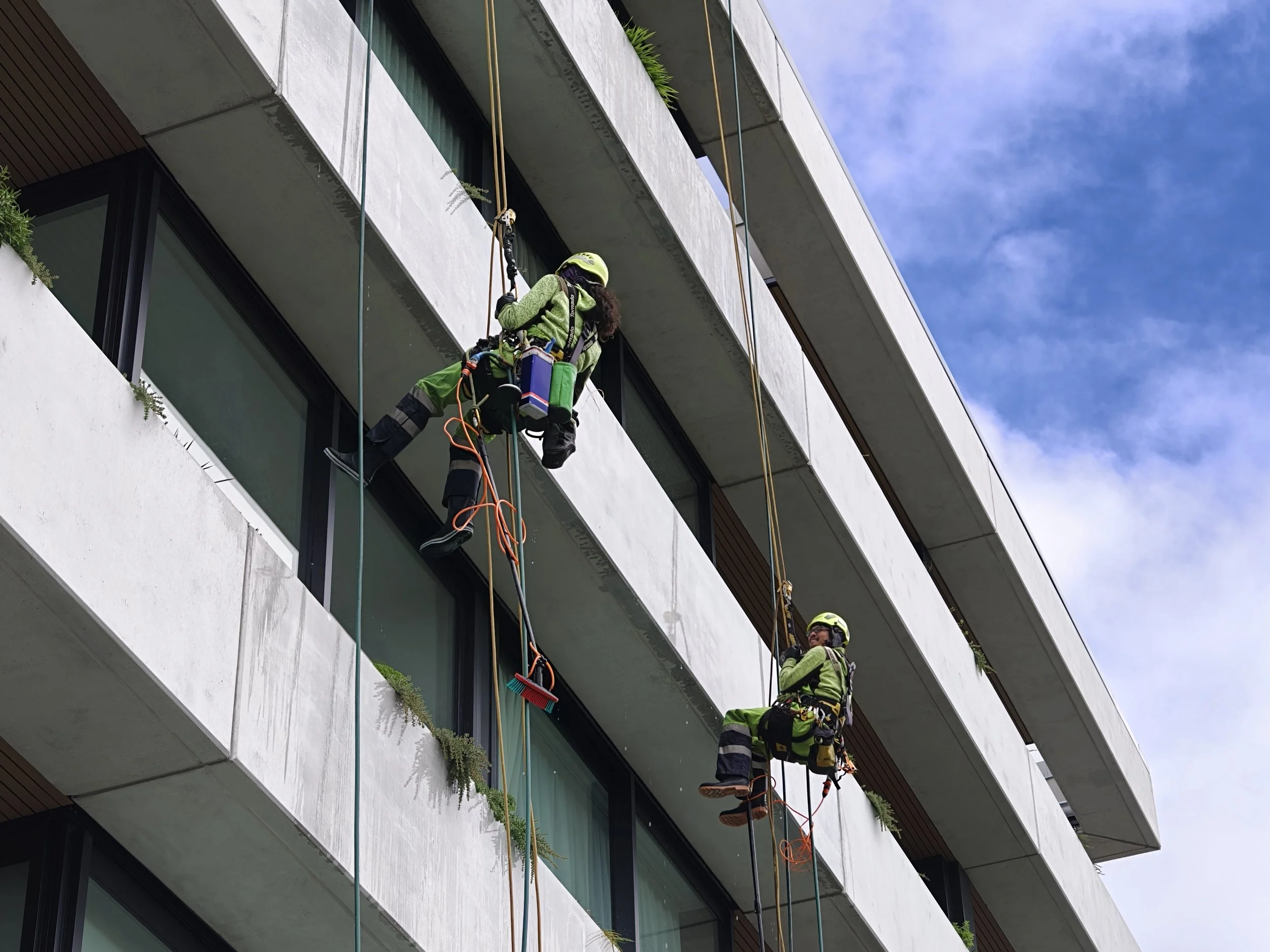
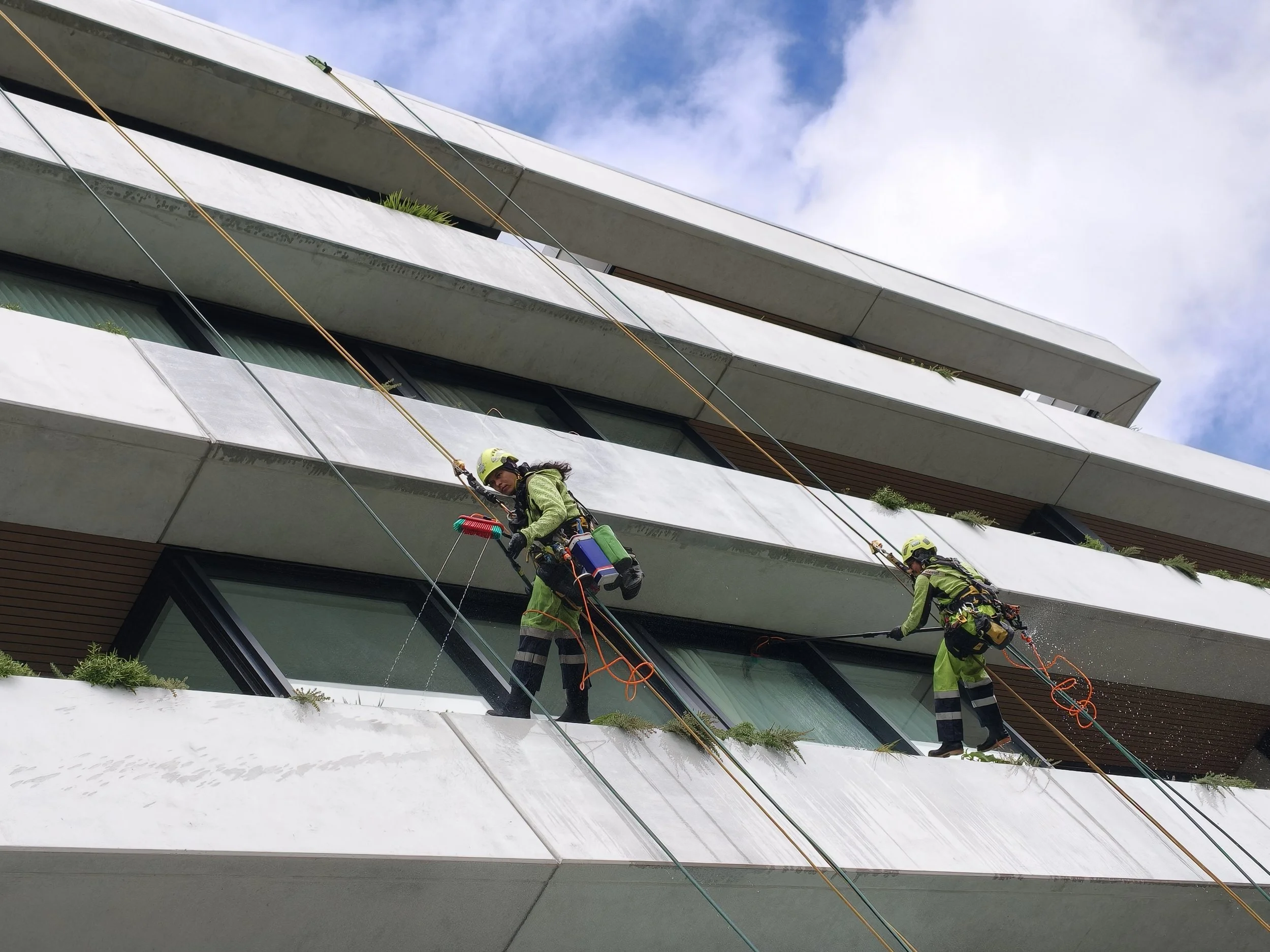
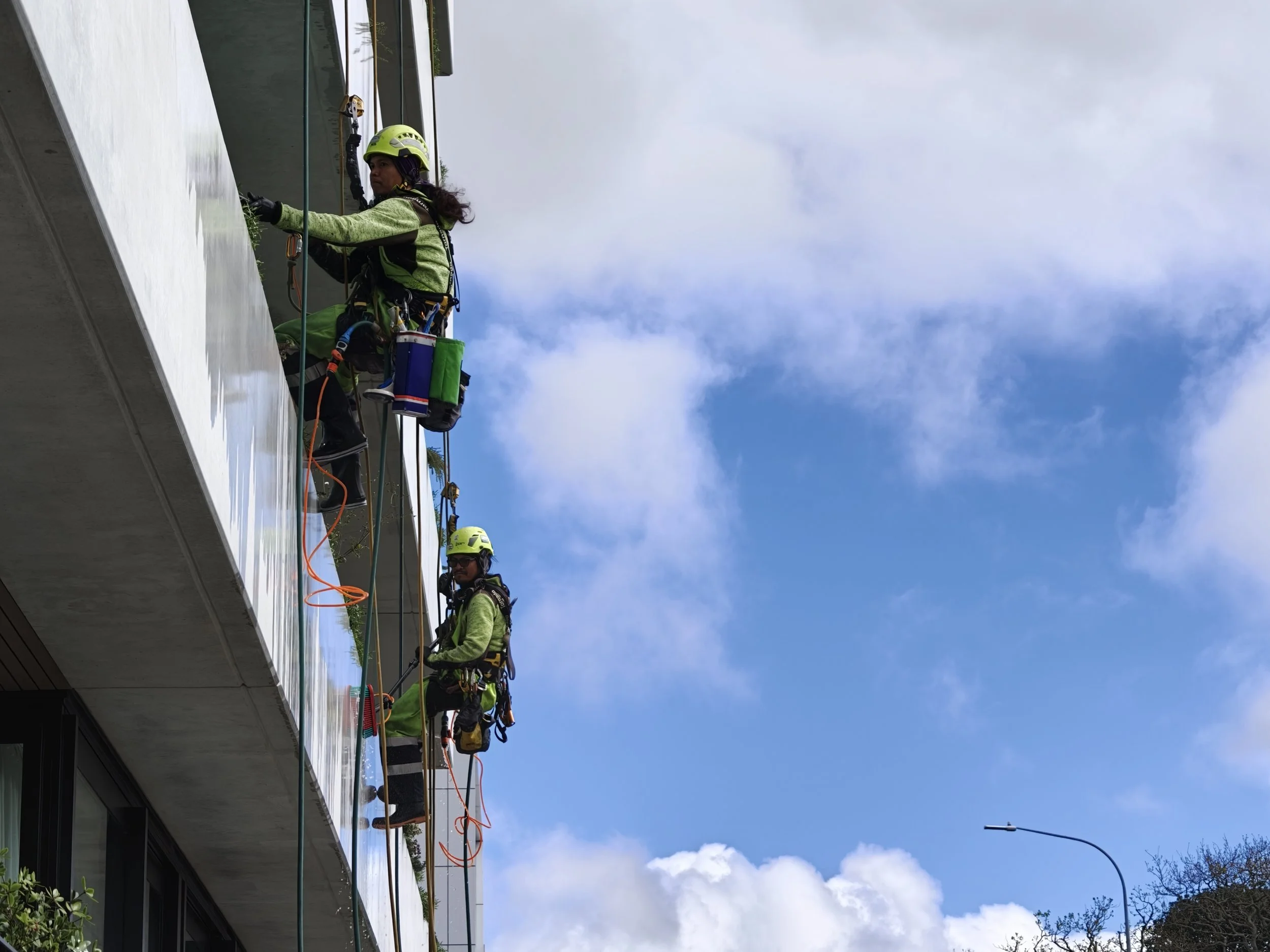
Industrial rope access allowed the MB Property Services team to clean difficult-to-reach façade surfaces without using elevated work platforms or large machinery
Completing the Final Stages of a New Build
The final stage of a construction project often brings together a wide range of detailed work. By this point, most of the major construction has been completed, but the external elevations still need a thorough clean, close inspection and attention to any remaining remedial items.
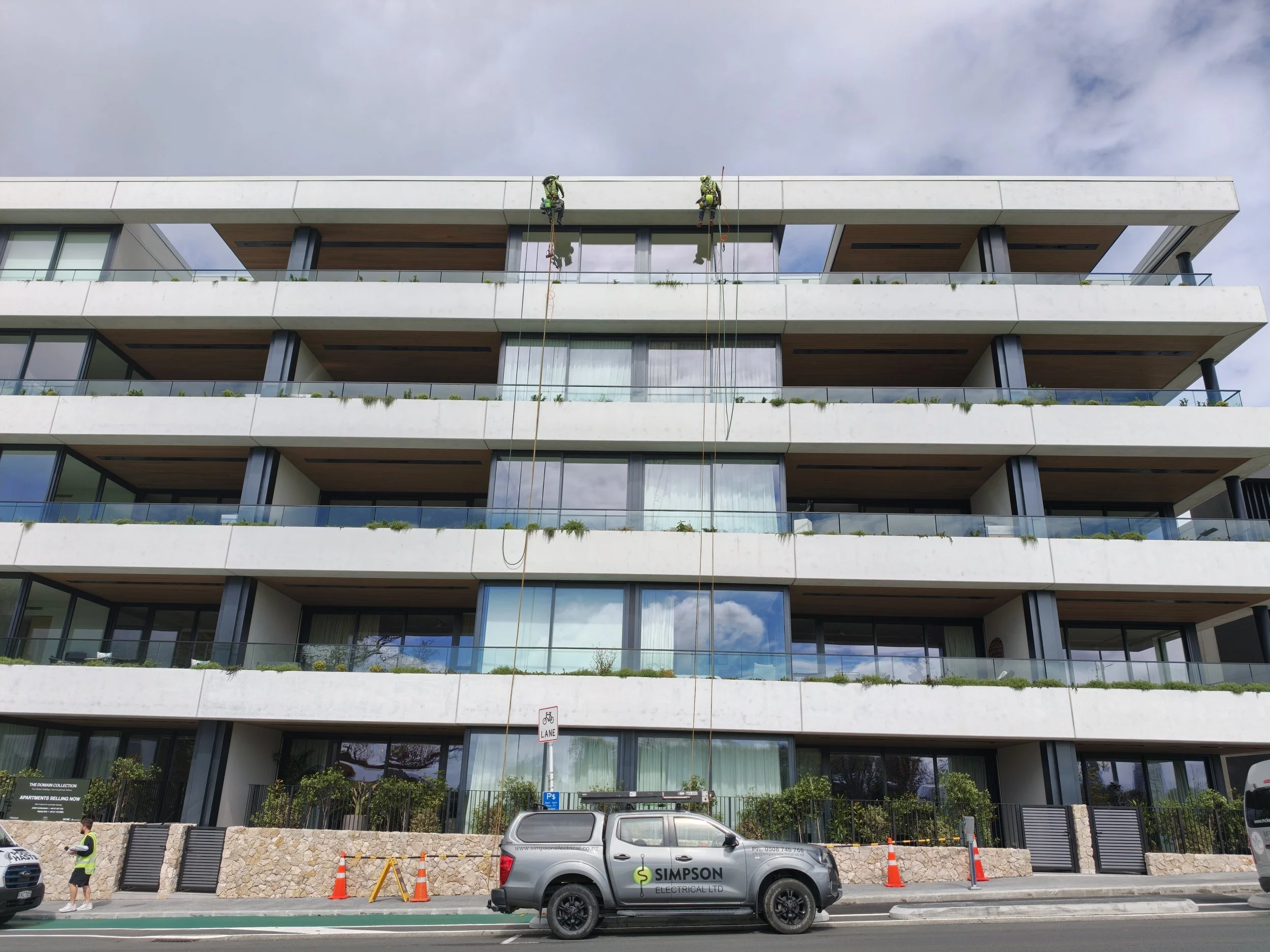
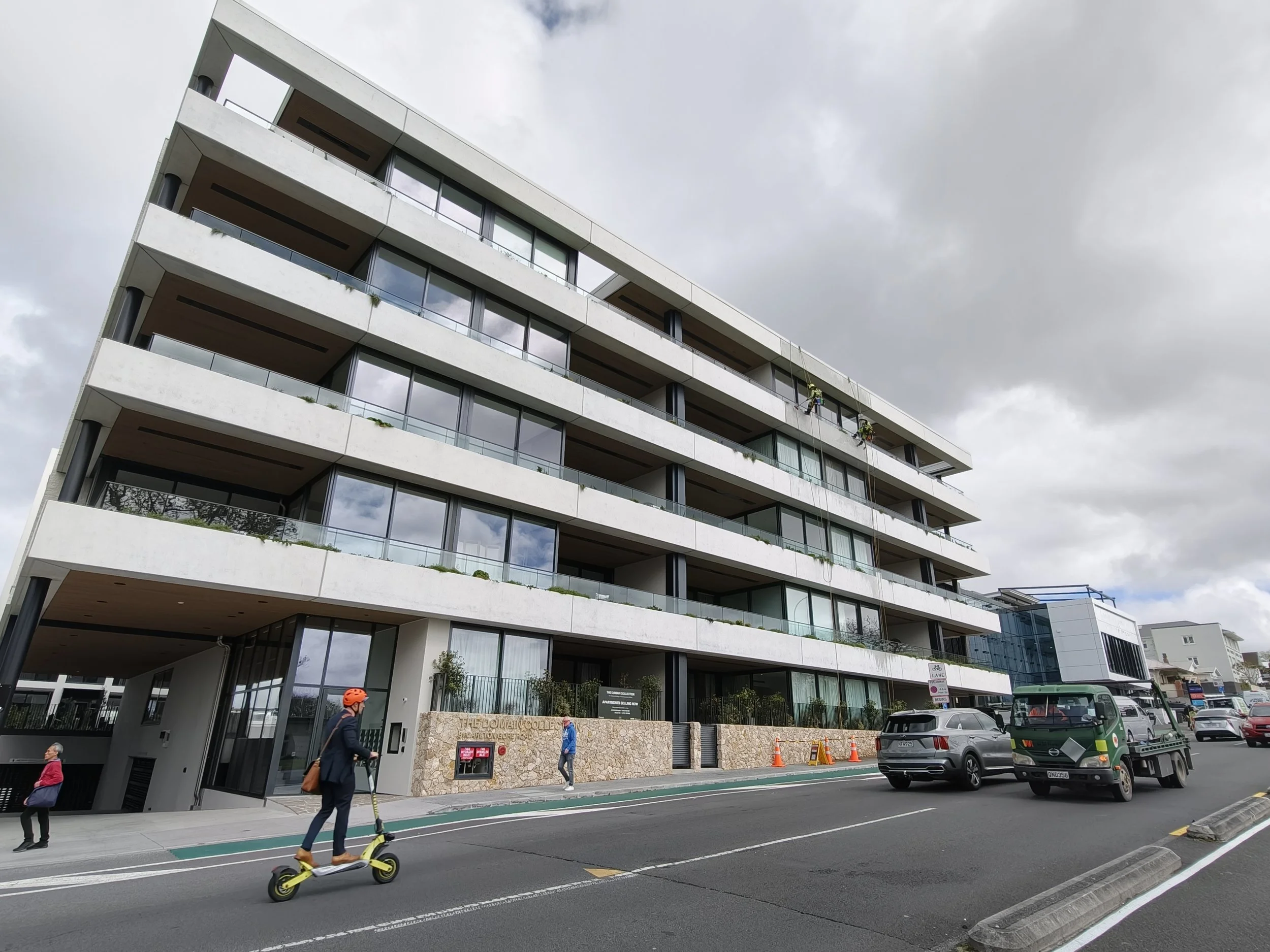
For this new apartment development in Newmarket, near the Auckland Domain, much of the exterior could only be reached safely and practically by rope access.
The front face and internal courtyard did not provide suitable access for elevated work platforms or other large machinery. The rear elevation also backed onto the railway corridor, creating further restrictions around equipment placement and access.
Rope access gave our technicians a controlled way to reach these areas without relying on machinery at ground level.
Building Wash and Detailed Construction Cleaning
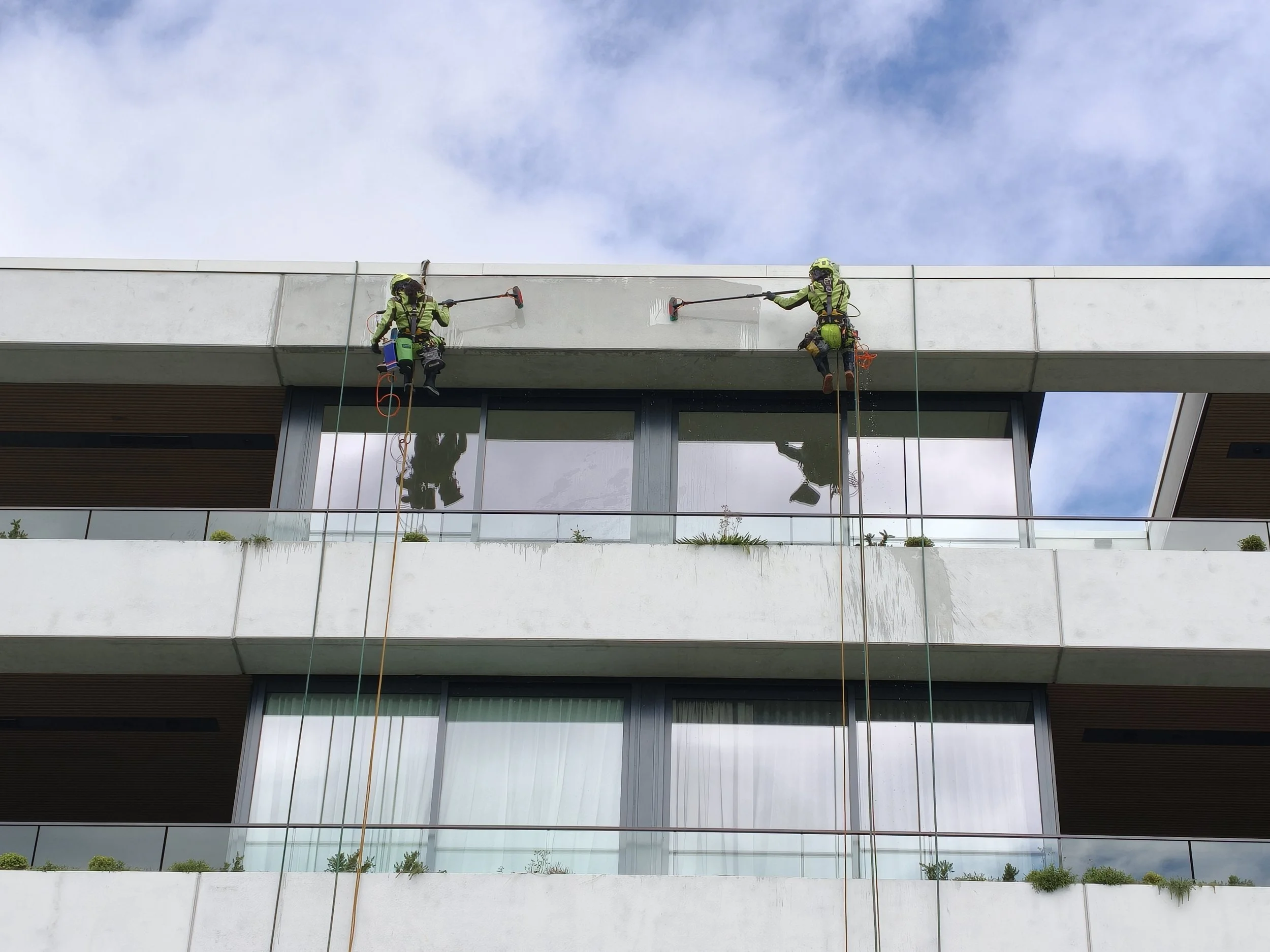
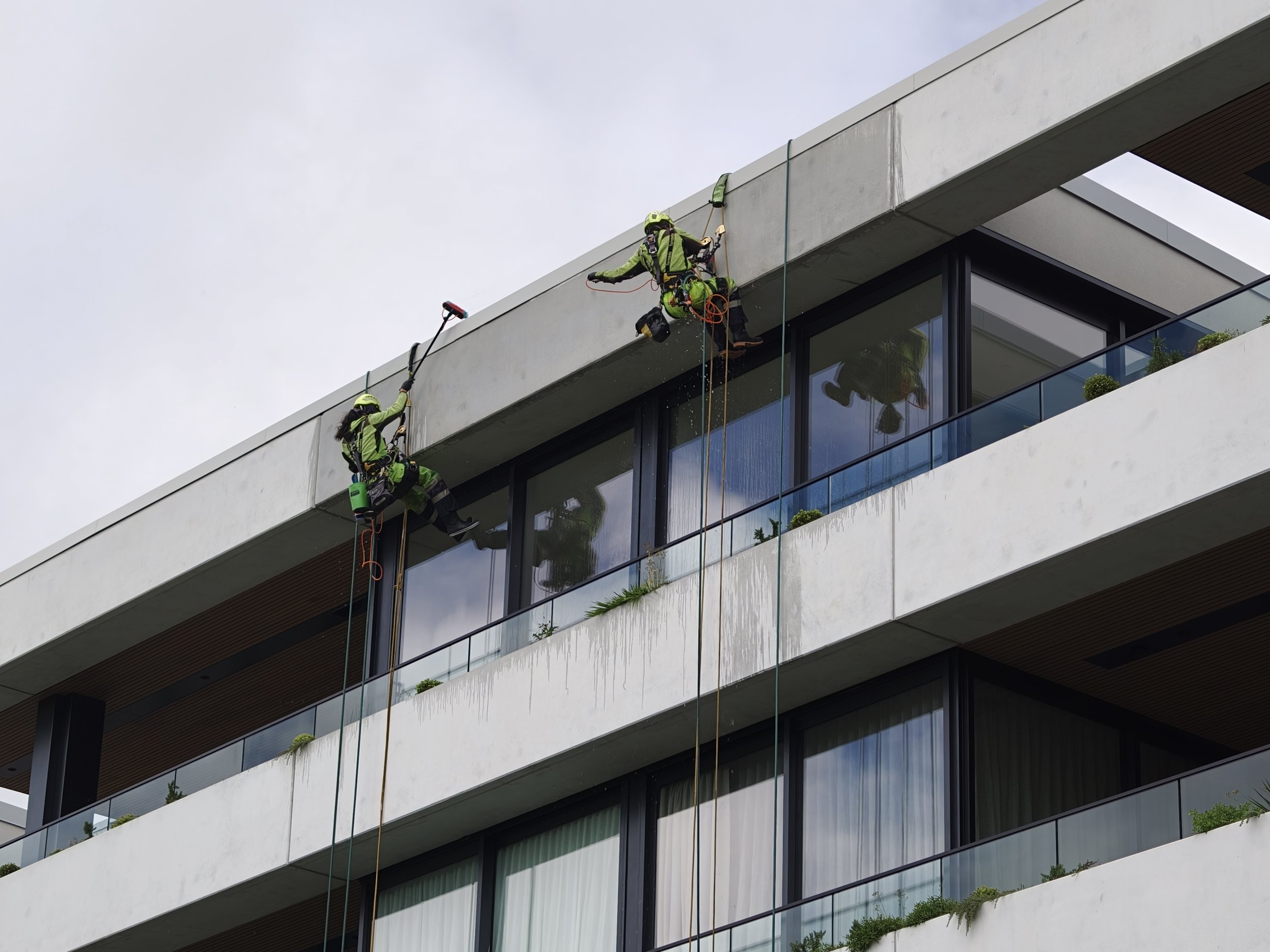
Our work included external building washing, window cleaning and detailed cleaning of areas that had collected construction dust, residue and general marks during the build.
New-build cleaning is different from routine maintenance cleaning. Technicians need to work carefully around newly completed surfaces, glazing, façade finishes, flashings, sealant joints and other construction details.
The aim is to leave the exterior properly presented while taking care not to affect the completed finishes.
Working directly from ropes also allowed the technicians to get close to the façade. This made it easier to check corners, junctions and recessed areas that can be difficult to view properly from the ground or from a machine.
Completing Remedial Work at the Same Time
Alongside the cleaning work, our technicians attended to silicone remedials and other minor items identified across the elevations.
Combining the cleaning and remedial work helped reduce additional access setups. Once an area was reached, the technicians could clean it, inspect the surrounding details and complete the required work before moving to the next section.
This requires good coordination with the main contractor and other trades. Materials, tools and work areas need to be planned in advance so the team can complete each section efficiently without unnecessary movement across the building.
Task analysis, rope layouts, tool control and the management of exclusion areas below are all important parts of that planning. On the rear elevation, the railway boundary also required particular care when determining where ropes could be positioned and how the work would be carried out.
Planning for the Tail End of Construction
External cleaning and rope-access remedials usually take place near the end of a build, when programmes are already busy and completion dates are approaching.
We often discuss these stages with our regular clients well ahead of time. Although our work may be one of the final items on the construction programme, it still needs a realistic timeframe and a suitable place in the schedule.
For clients we have worked with over many years, we make an effort to anticipate upcoming projects and reserve suitable availability. This helps keep the final clean and remedial stage from becoming an afterthought.
It also allows the work to be coordinated around scaffold removal, completed landscaping, courtyard access, railway restrictions and the remaining construction activities on site.
Why Rope Access Suits Complex New Builds
Modern apartment buildings often contain courtyards, recessed façades, balconies and narrow boundaries that make conventional machinery difficult or impossible to use.
Rope access provides targeted access to these areas with a relatively small ground footprint. It can reduce disruption around the site and allows technicians to move methodically across individual elevations.
On this project, it provided practical access to the front face, courtyard and rear elevation while allowing the building wash, detailed cleaning and silicone remedial work to be completed as part of one coordinated programme.
The key is planning the access early enough. When the final external clean and remedial work is considered well before completion, the job can be carried out safely, carefully and without creating unnecessary pressure at the end of the build.
For property managers, developers and contractors, the question is worth asking early: once the scaffolding and machinery are gone, how will every part of the exterior be reached and properly completed?