Rescue Planning in Practice: Training for the Difficult Transfer
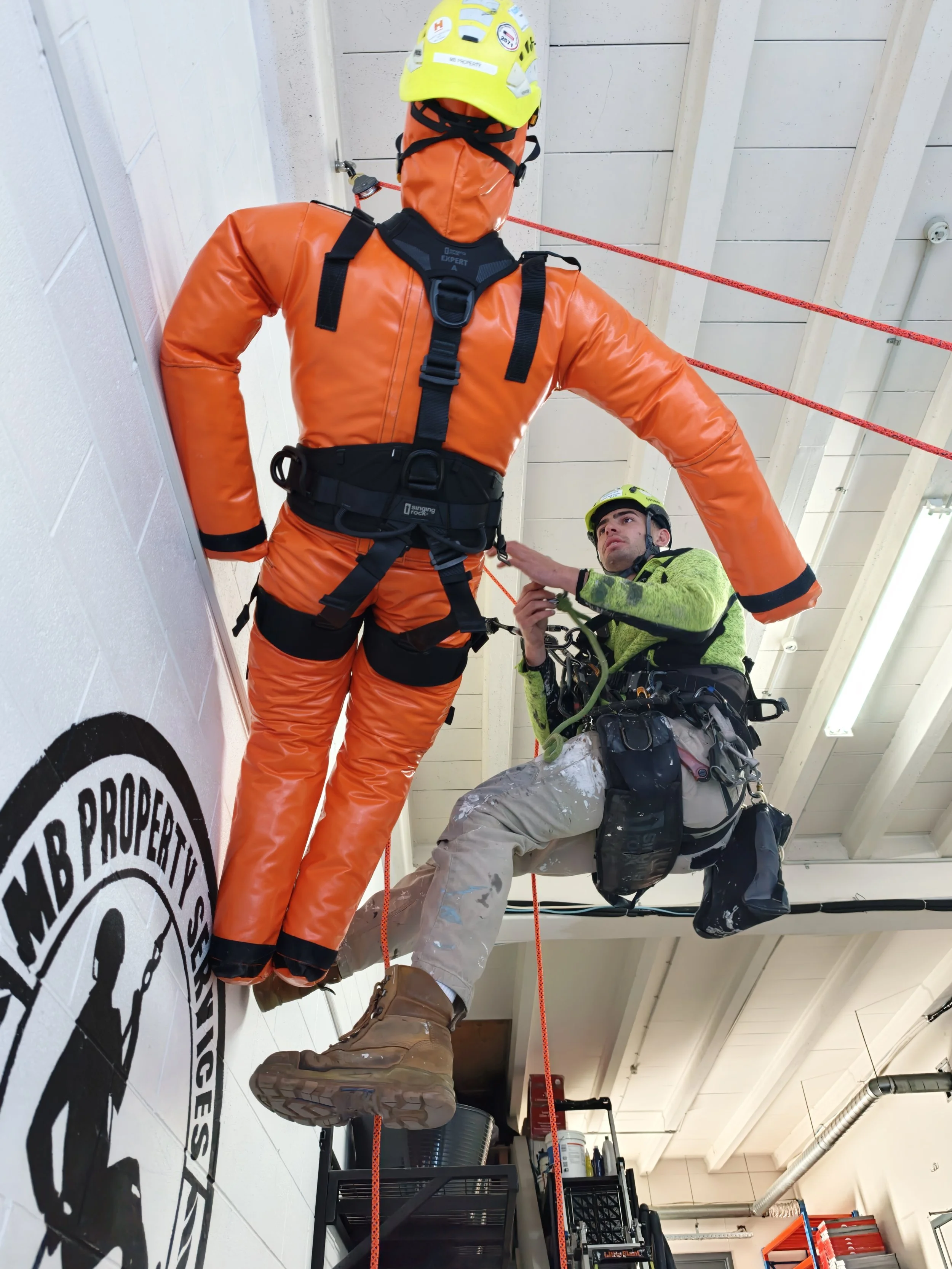
Rope Access Rescue Training with MB Property Services Ltd - Auckland, NZ
A rescue plan is only useful when it reflects the place where the work is actually being carried out.
An open edge, handrail, parapet or tower-crane gantry can each present a different problem. The available rigging points change, the direction of haul changes and the casualty may need to be carefully moved over an obstacle before a descent can begin.
That is why rescue arrangements cannot simply be copied from one site to another.
Practising the haul and transfer
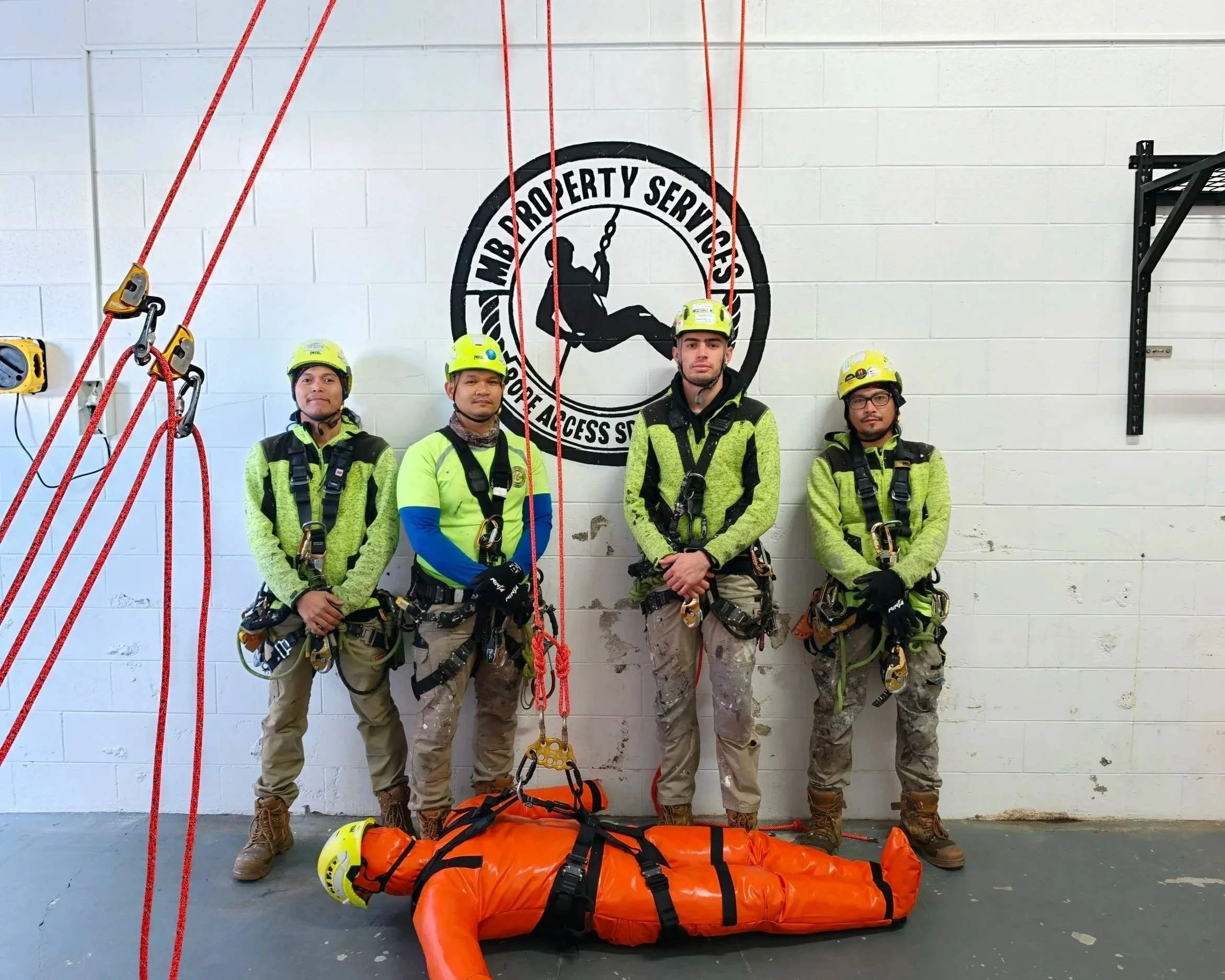
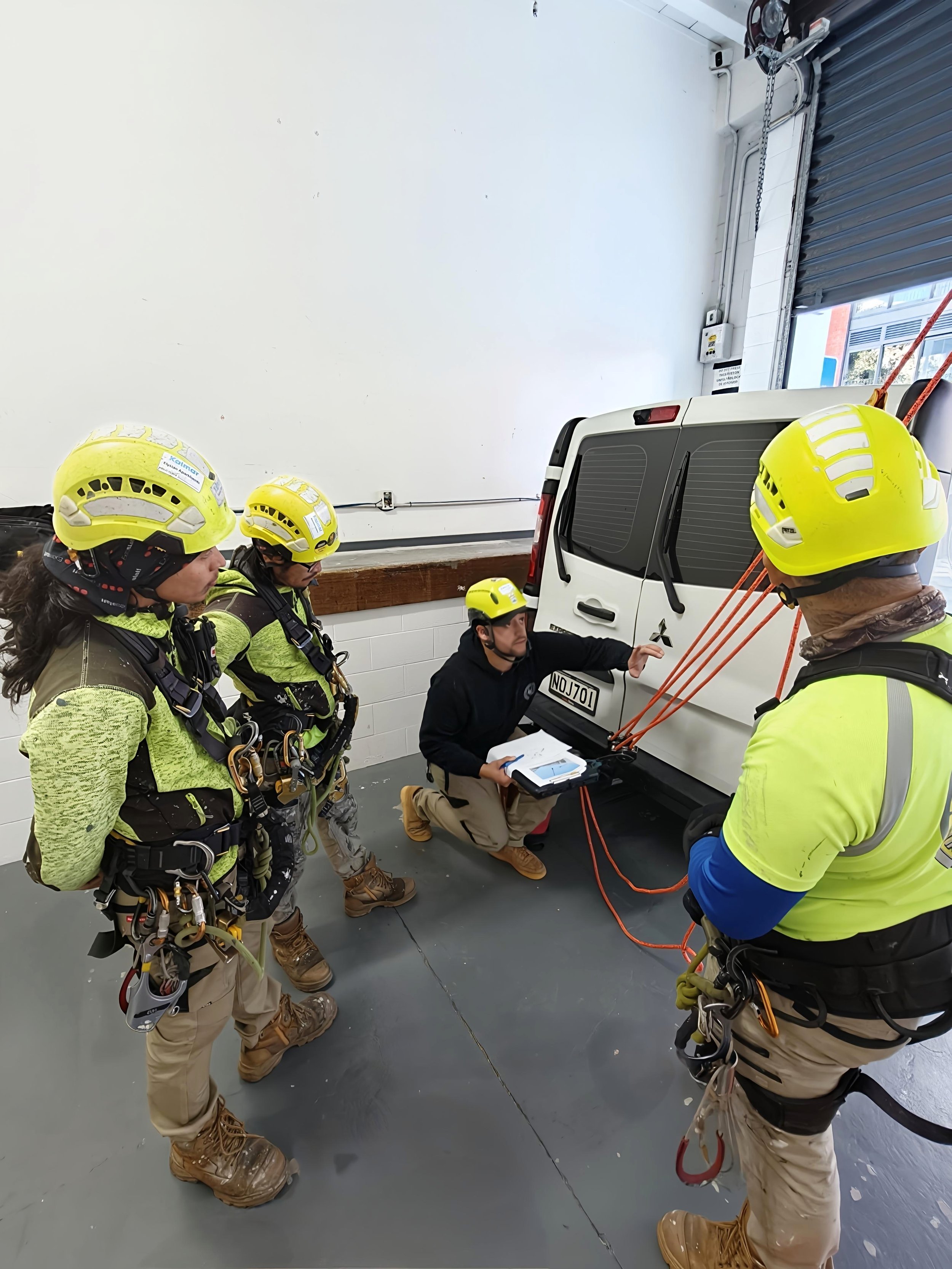
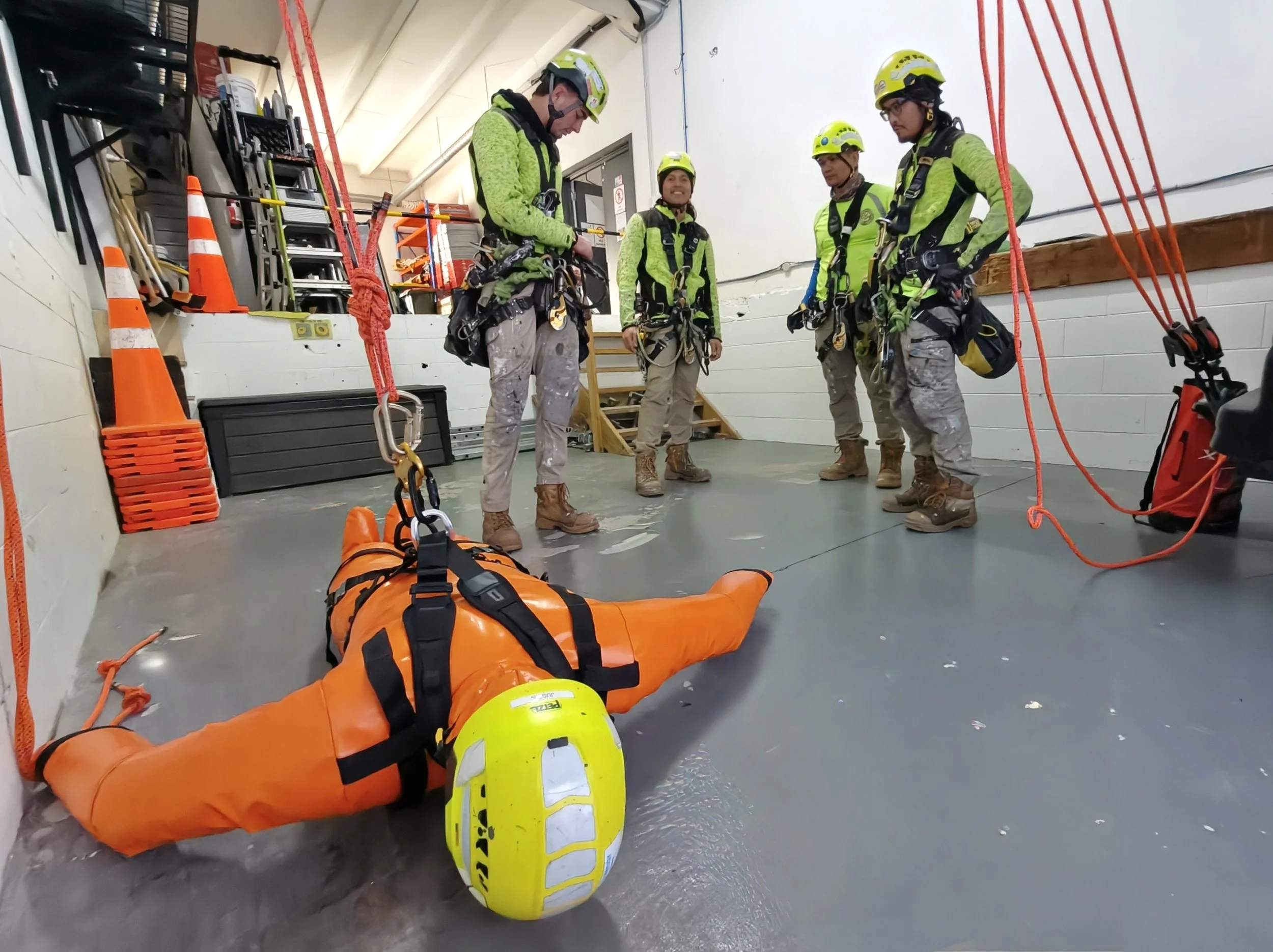
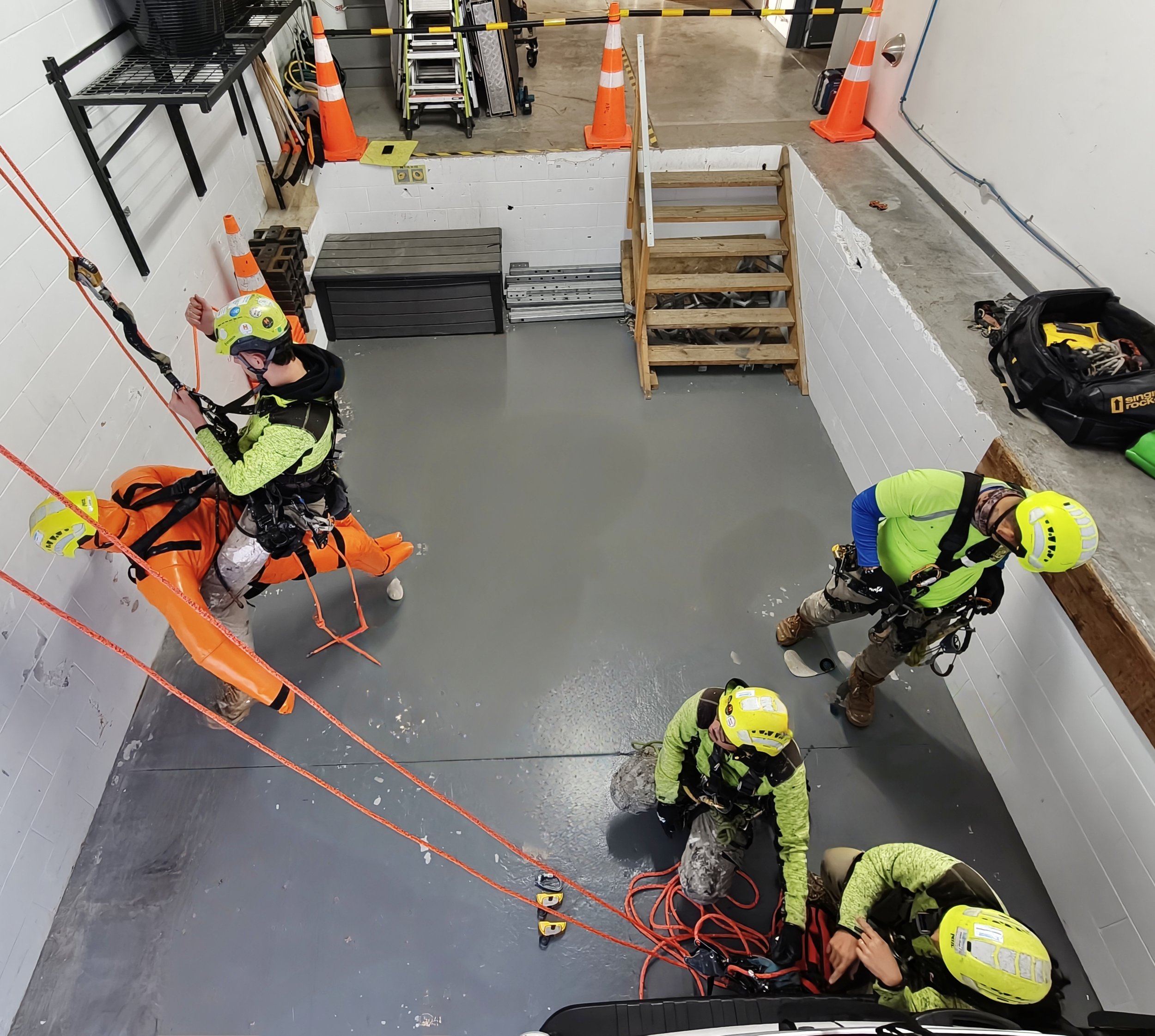
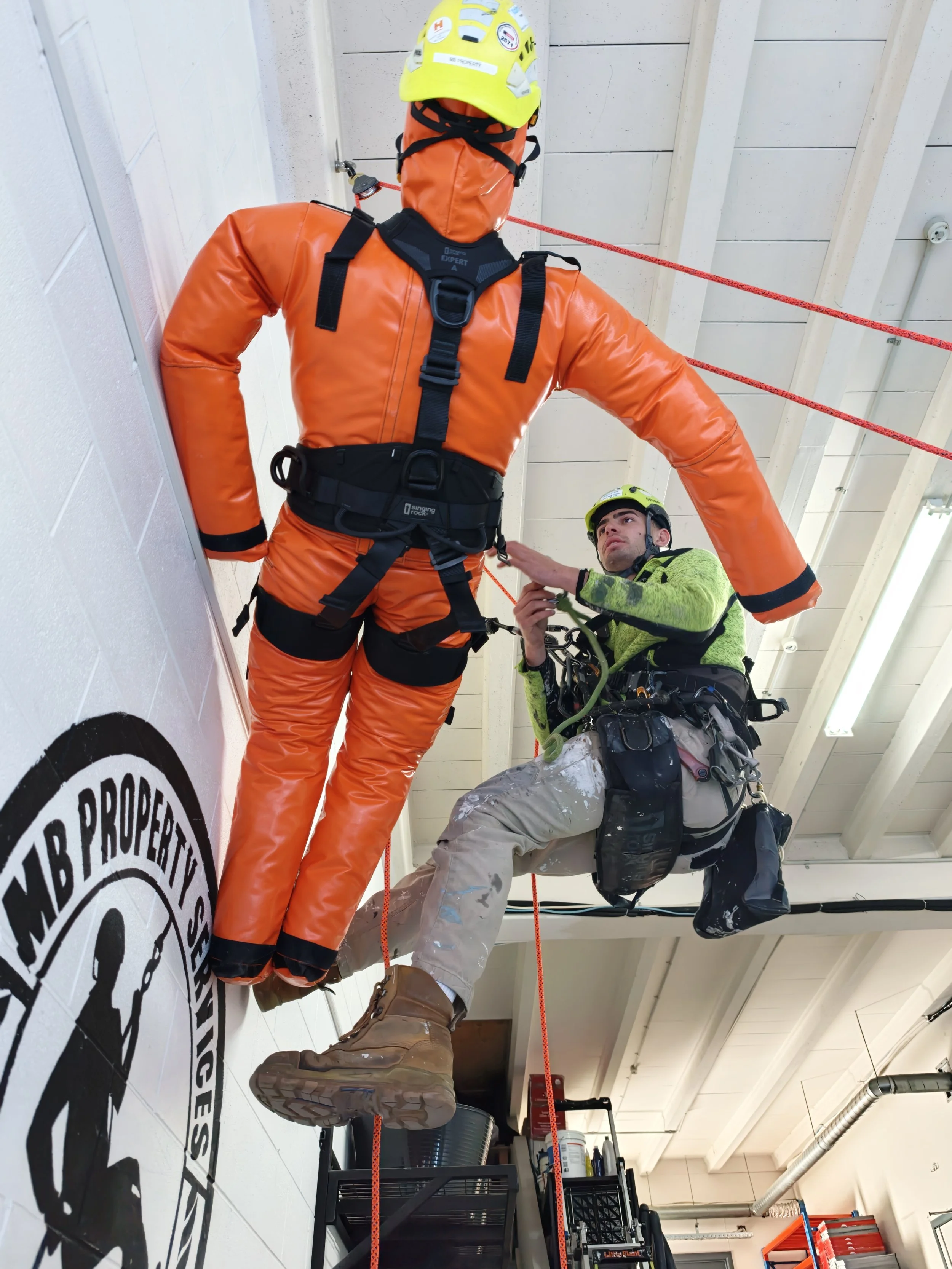
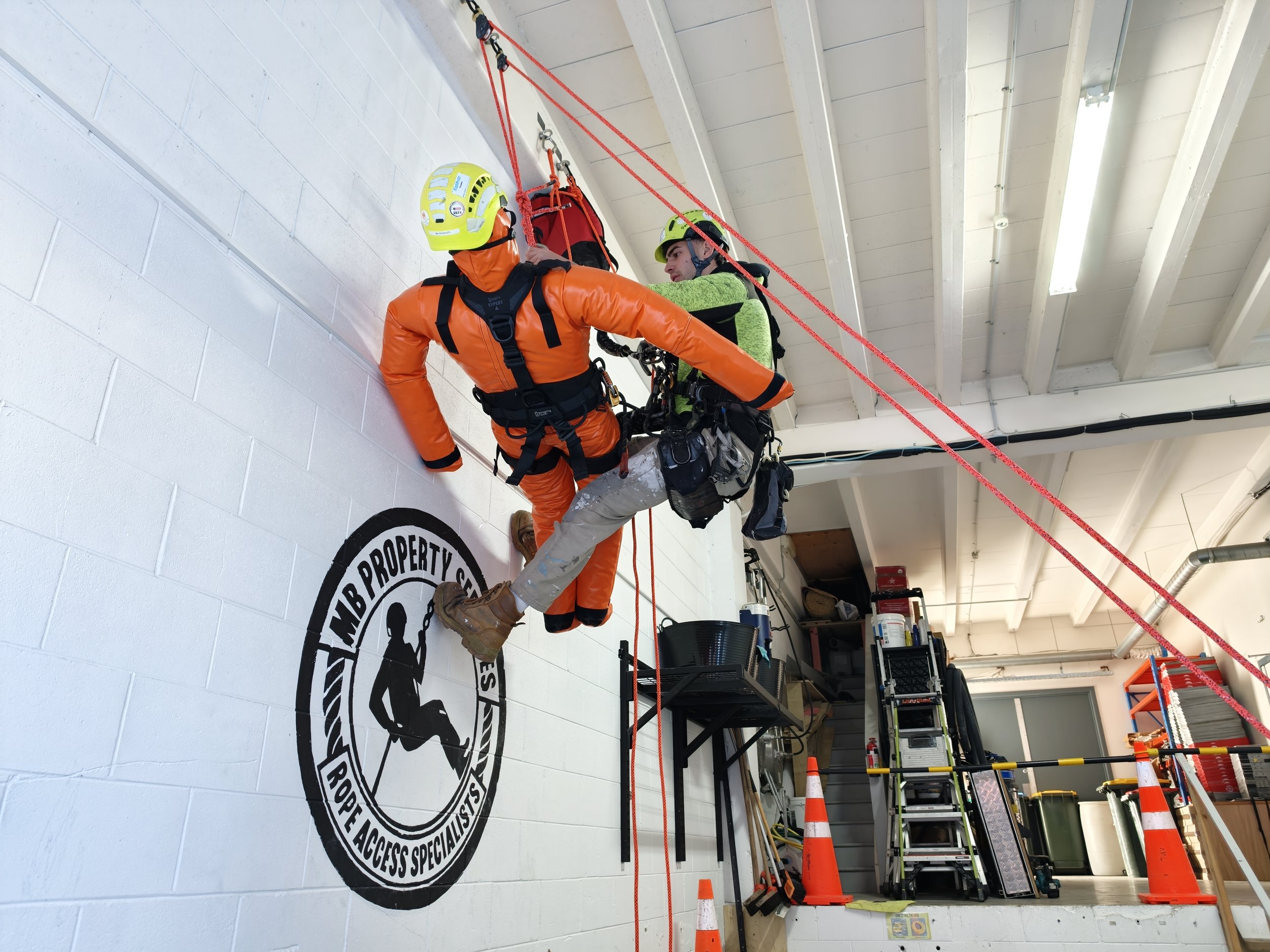
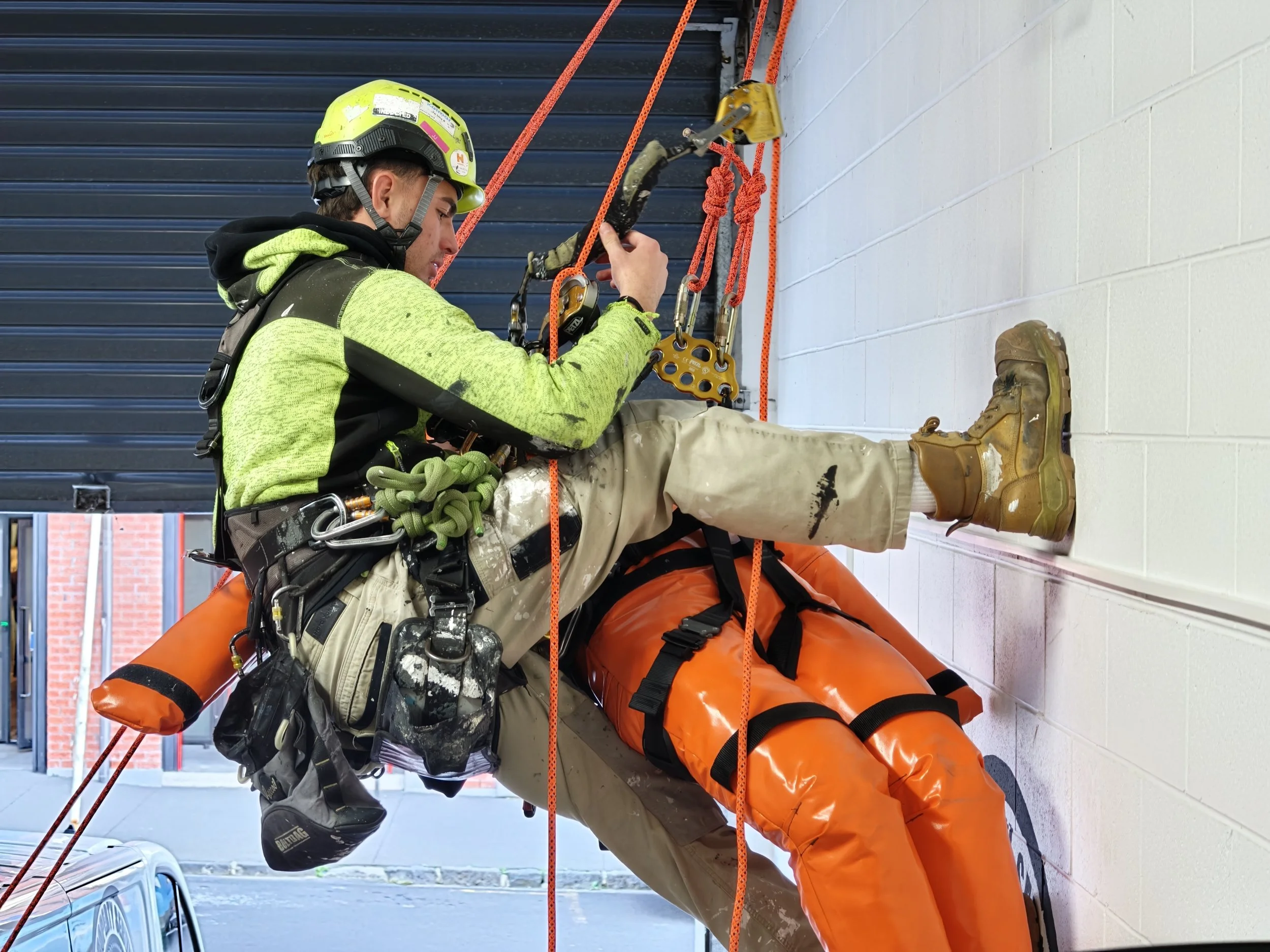
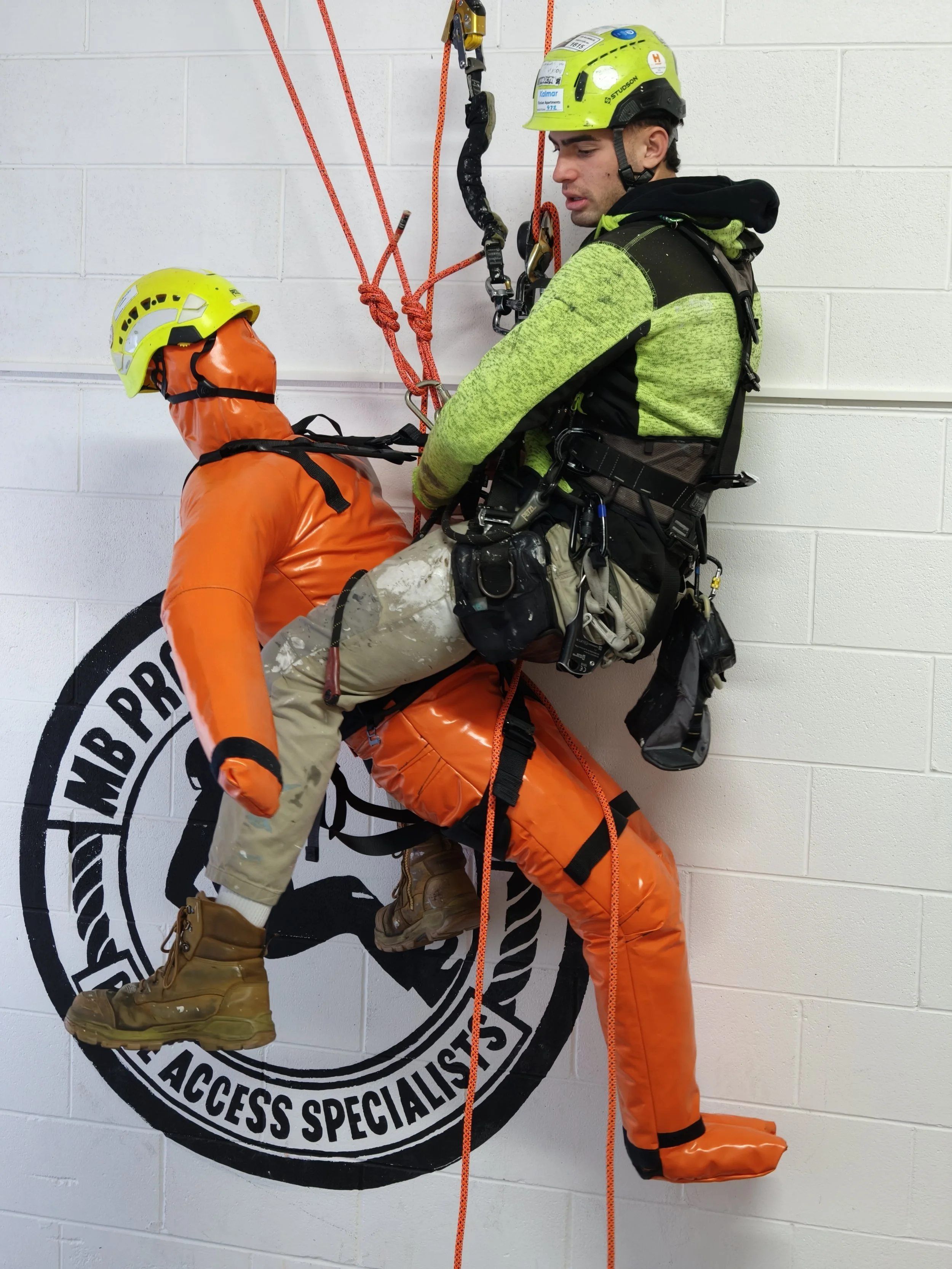
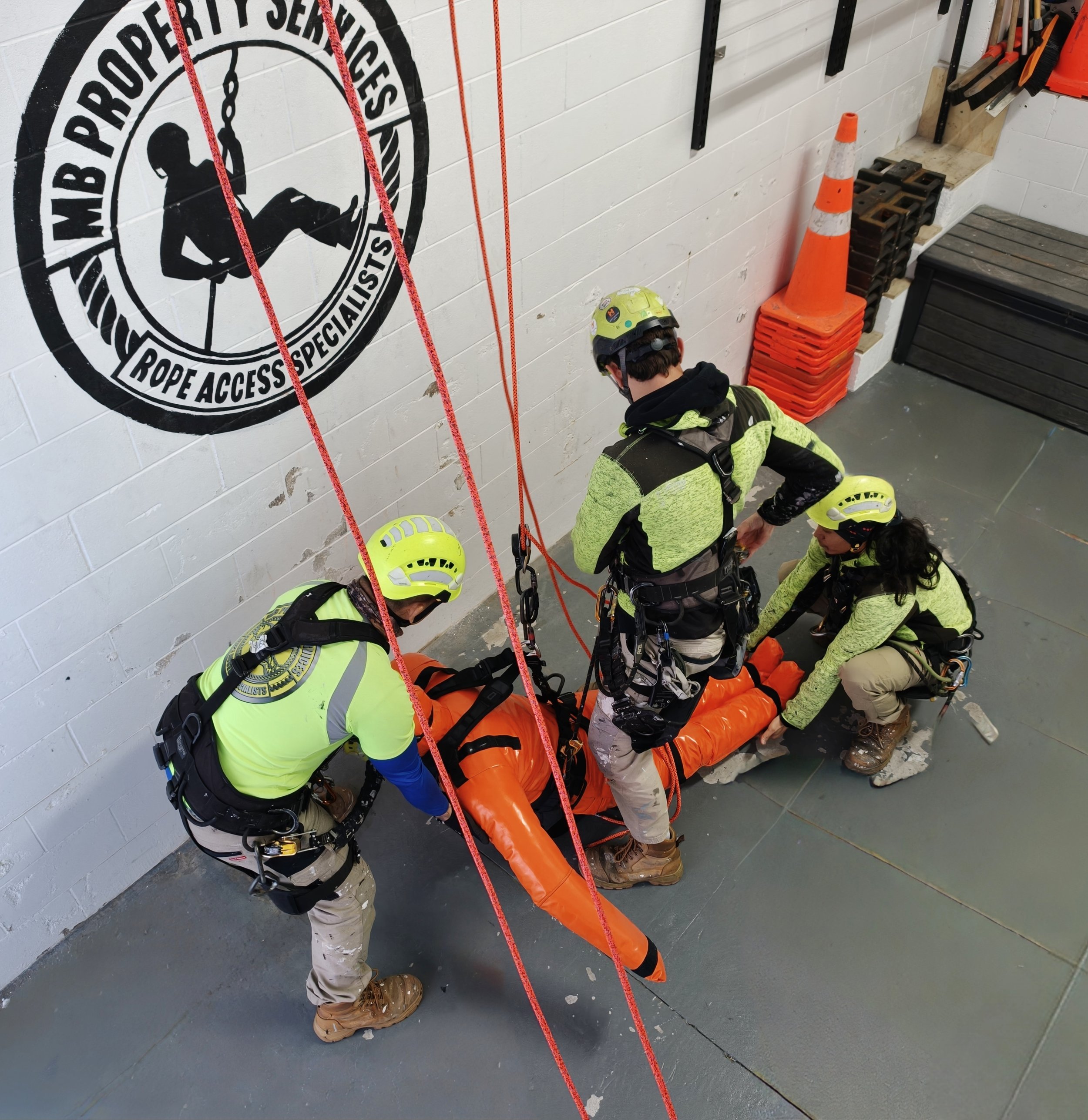
During a recent in-house training session, the MB Property Services team practised a scenario involving the raising of a casualty and transferring them over an obstruction.
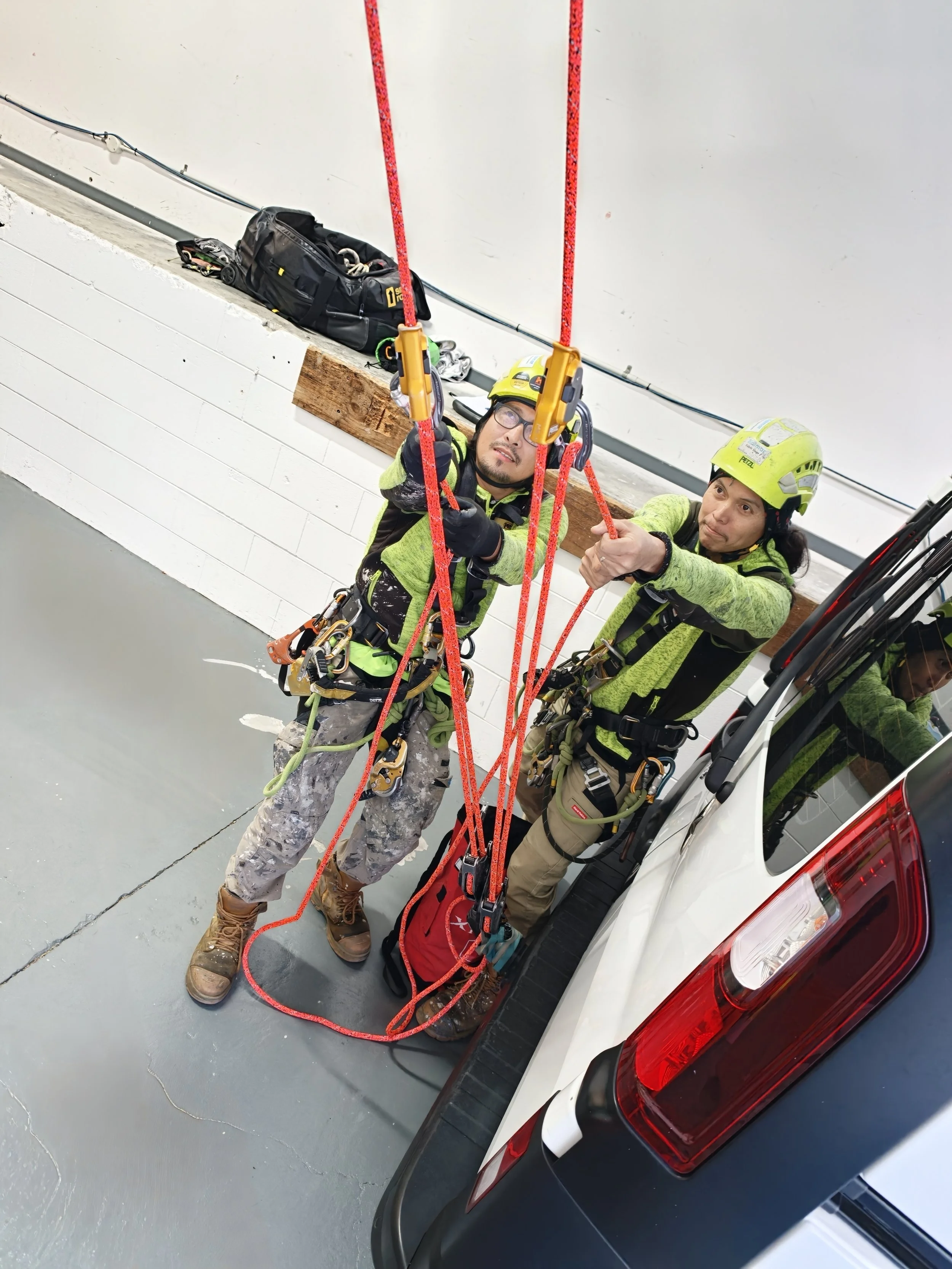
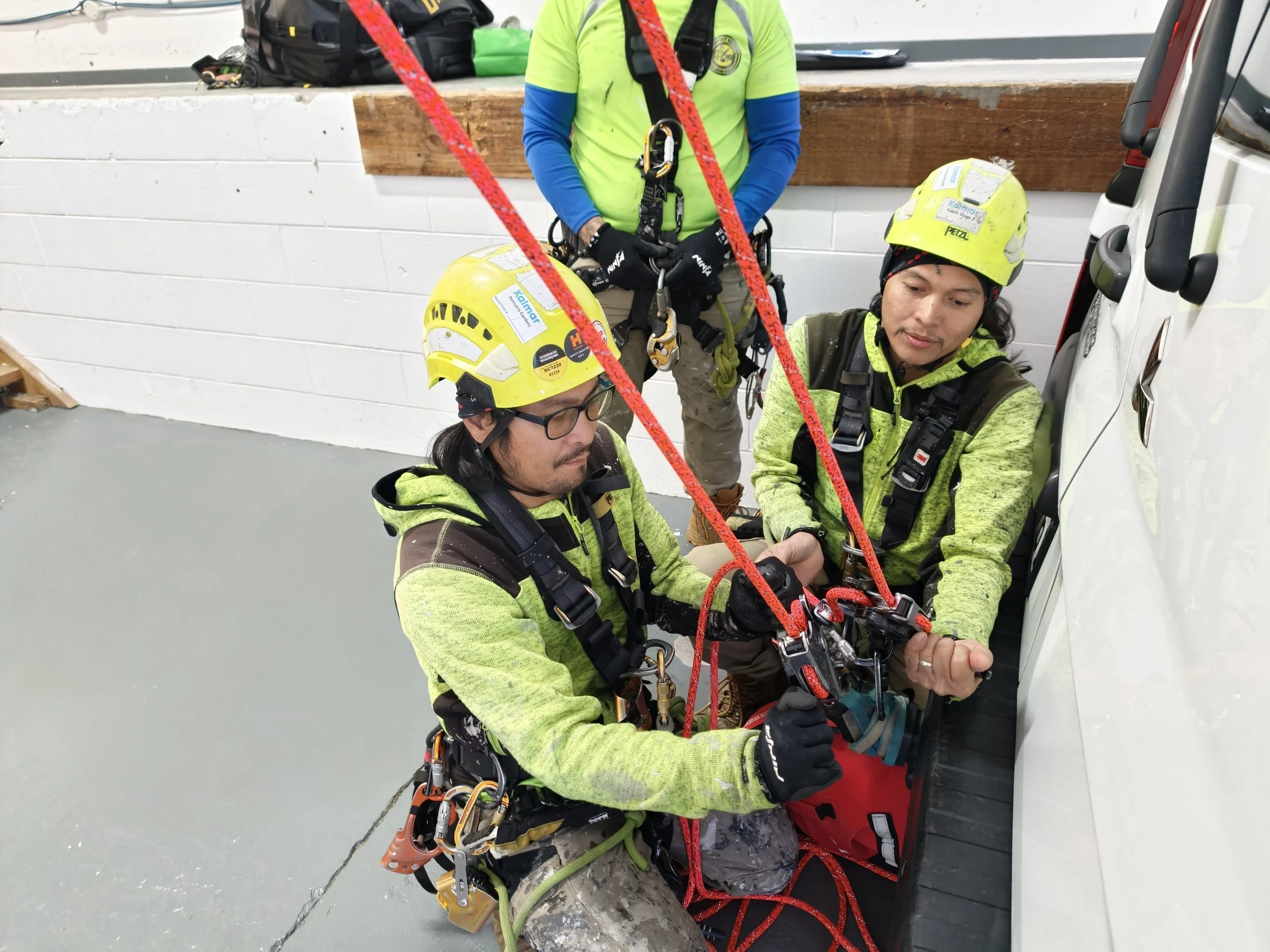
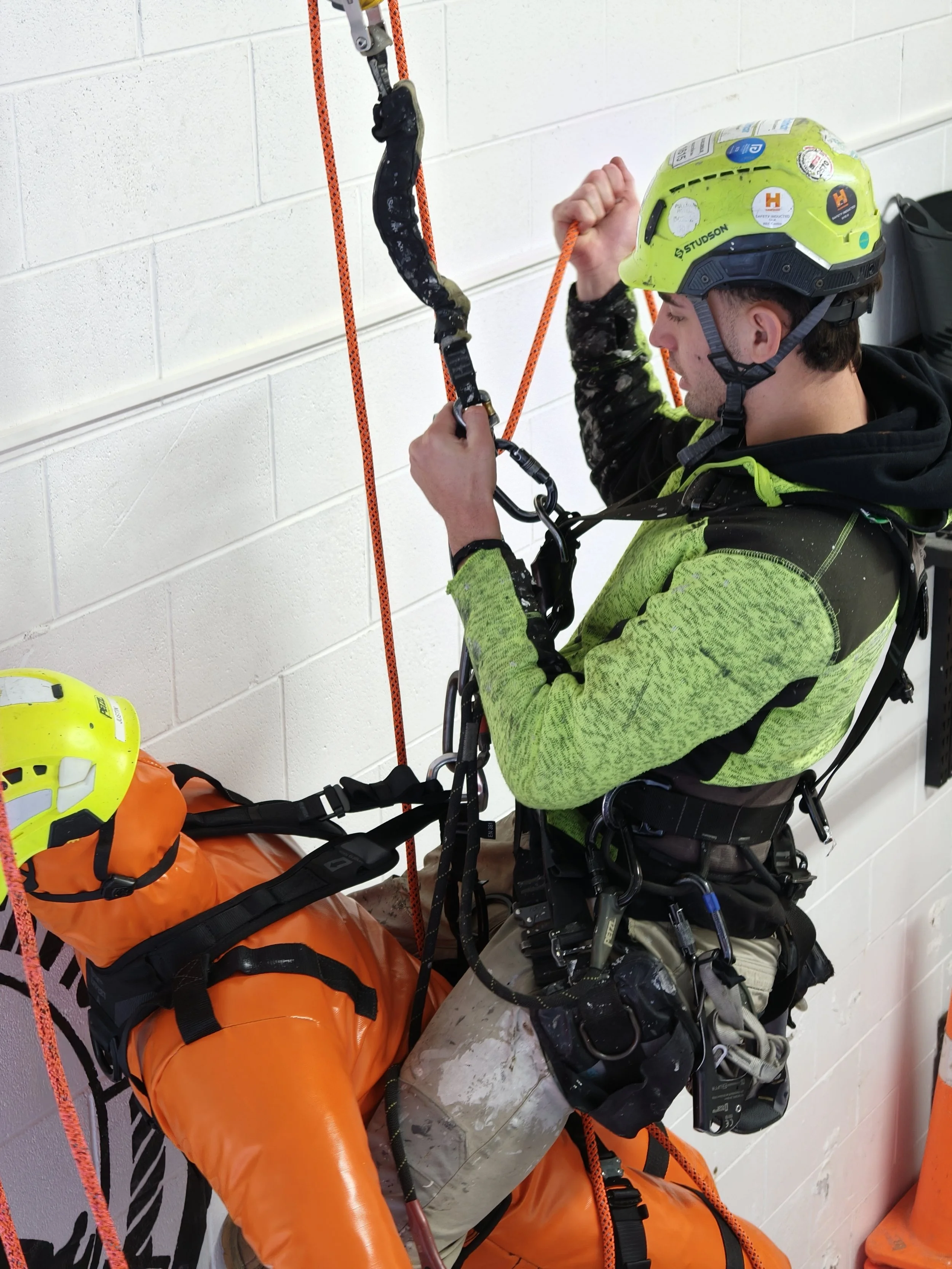
The system was configured as a 3:1 mechanical-advantage haul. Equipment used during the exercise included a CMC CLUTCH by Harken Industrial, a Petzl RESCUCENDER rope clamp, a Petzl ROLLCLIP pulley-carabiner and the associated pulley, ropes and connectors required for the planned arrangement.
In a theoretical 3:1 system, the hauling effort is reduced by sharing the load across three rope sections. Real systems are affected by friction, rope direction and the efficiency of each component, so the complete arrangement still needs to be assessed for the actual site and load.
The objective was not simply to raise the casualty. The team also had to control the approach to the obstacle, manage the casualty’s position and coordinate with a rope access technician who was already established on their ropes.
Once the casualty reached the transfer position, the technician could take control and prepare for a careful accompanied descent.
Why access planning matters
A rescue involving an edge or barrier requires more than the right equipment.
Before anything is rigged, the team must consider the available anchors, potential loading directions, edge protection, clearances and the space needed by rescuers. The area below also needs to be controlled so that other workers and members of the public are kept clear.
Tools and loose equipment must be secured, communication needs to remain clear and each person must understand their role before the system is loaded.
These details are what turn a written rescue plan into a practical site arrangement. They also help confirm whether the proposed method remains suitable when site conditions, access points or work activities change.
Building familiarity through regular training
In-house exercises allow our technicians to become familiar with different hauling arrangements before they are needed on a live site.
They provide an opportunity to handle the equipment, review changeovers and practise communication under controlled conditions. They also show where a system may need to be repositioned or adapted around a handrail, parapet or other structural feature.
The same planning supports day-to-day rope access work. Whether technicians are inspecting surfaces, checking fixings and junctions or carrying out planned façade maintenance, good access arrangements allow the work to be completed properly rather than treated as a paperwork exercise.
Supporting other trades at height
Rescue capability is important for our own rope access teams, but it can also support other trades working in difficult areas on construction sites.
Where it has been properly assessed and planned, a rope system may help recover a worker over a barrier or from an area where ordinary access is restricted. Every situation remains site-specific and must be managed by trained, competent personnel using compatible equipment and suitable anchors.
The outcome is the same: getting the person from an exposed position to a safer place without creating additional risk for the casualty, rescuers or people working below.
Preparedness is part of the job
Rope access is practical for many occupied buildings and active construction sites because it provides targeted access with a relatively small setup footprint. That can reduce disruption, but it does not reduce the need for planning.
Consistent training helps technicians understand both the equipment and the decisions behind its use. It reinforces that rescue planning, site control and communication are part of the work from the beginning.
When was the last time your working-at-height rescue plan was tested against the actual access points, barriers and rigging options on site?
Industrial Rope Access New Zealand with MB Property Services Ltd