One of the things people often overlook when they look up at a building is how technicians are actually meant to access it.
Windows need cleaning. Facades need inspecting. Sealants, fixings, and junction points all need to be checked over time. But without proper access systems in place, even the simplest maintenance task can become unnecessarily difficult.
That is where properly installed roof anchors and rope access systems come into the picture.
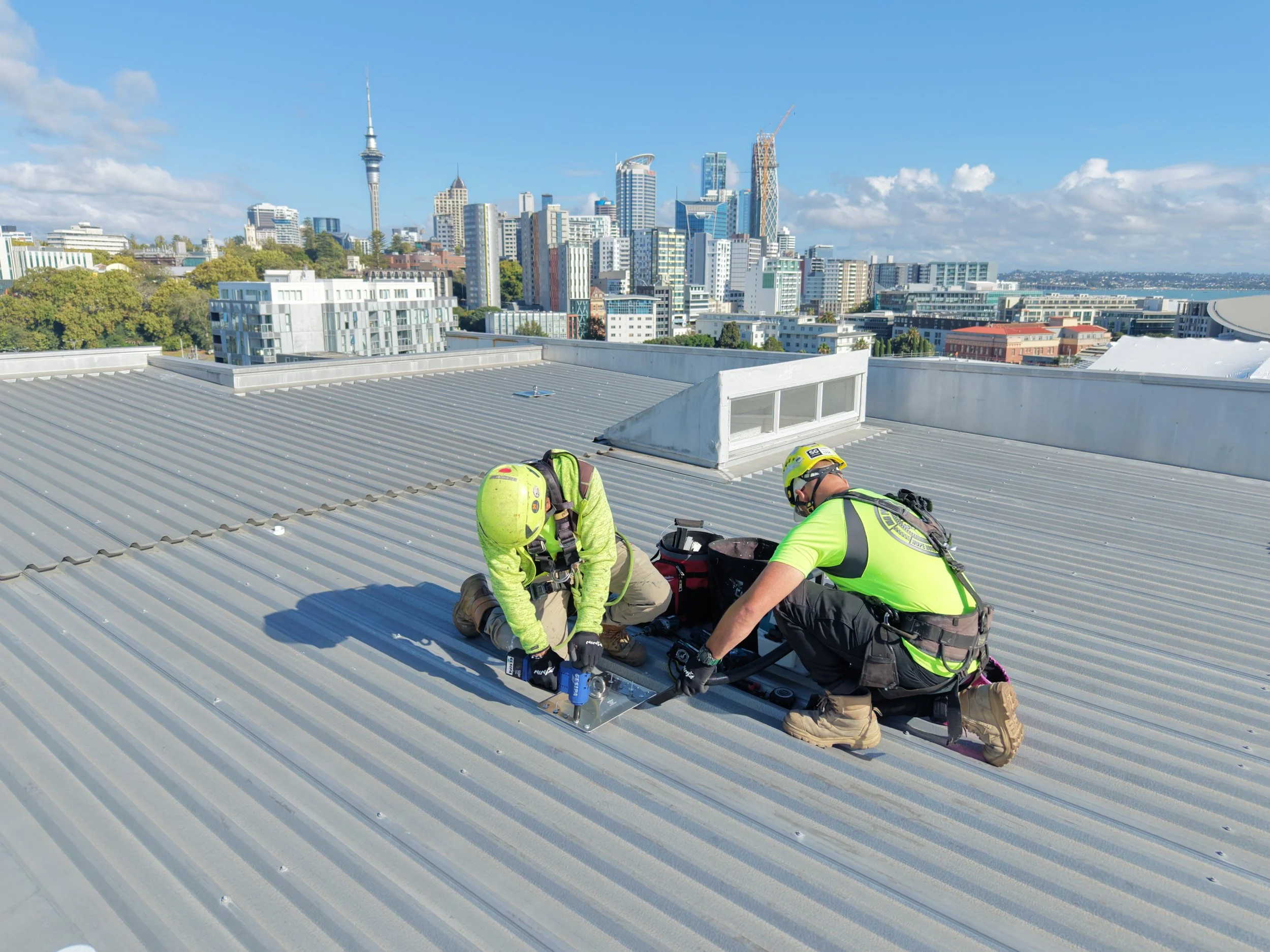
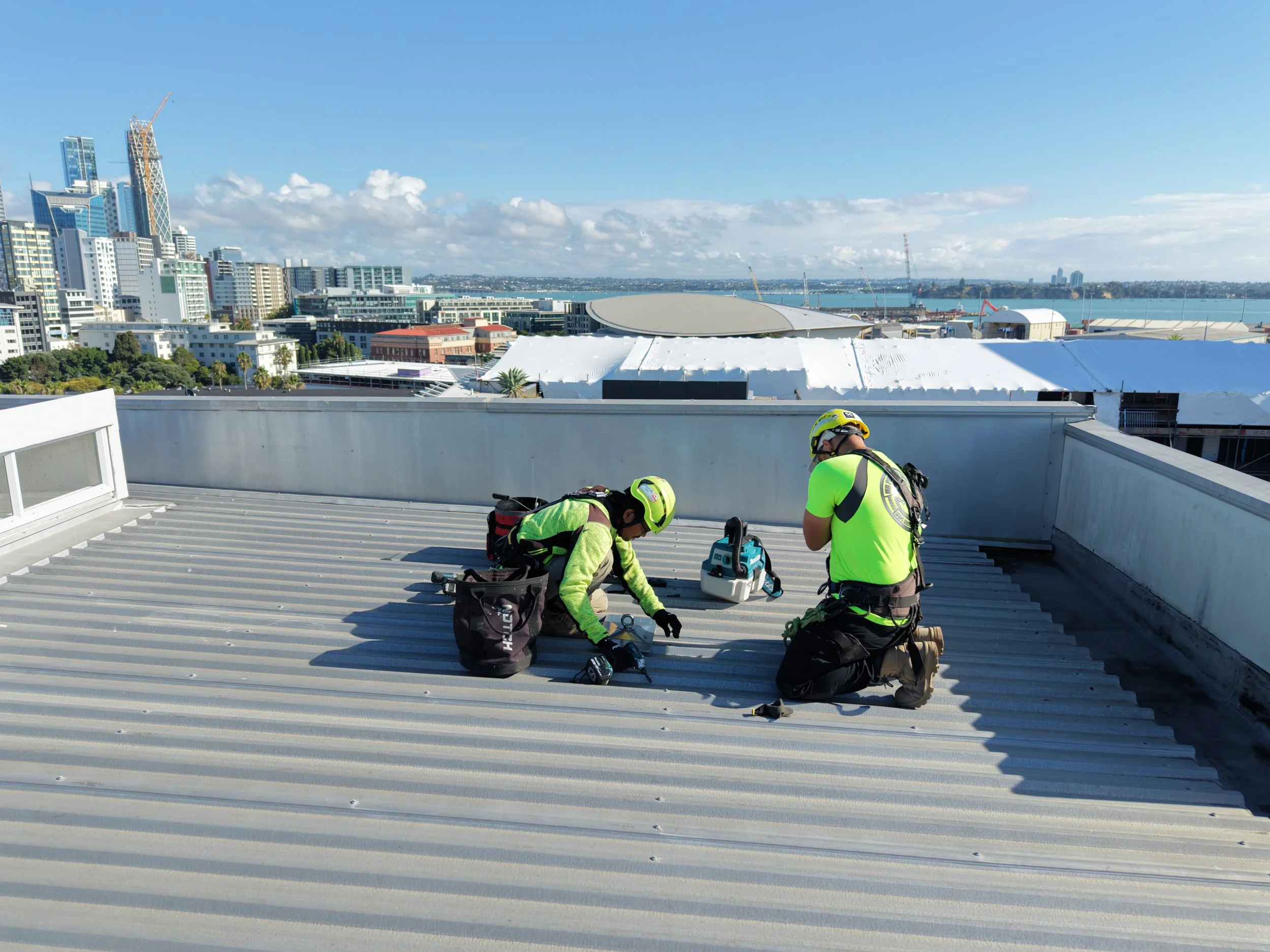
Across Auckland and wider New Zealand, MB Property Services regularly installs abseiling roof anchors, deviations, static lines, rail lifelines, and other engineered systems that allow technicians to safely carry out work at height. These systems support industrial rope access operations for building maintenance, inspections, facade work, and preventative upkeep.
Some installations are carried out on new developments during construction, while others involve retrofitting existing buildings so they can be maintained safely for the decades ahead.
The Work Behind Roof Access Systems
Installing roof anchors is not simply a matter of fixing hardware into a roof.
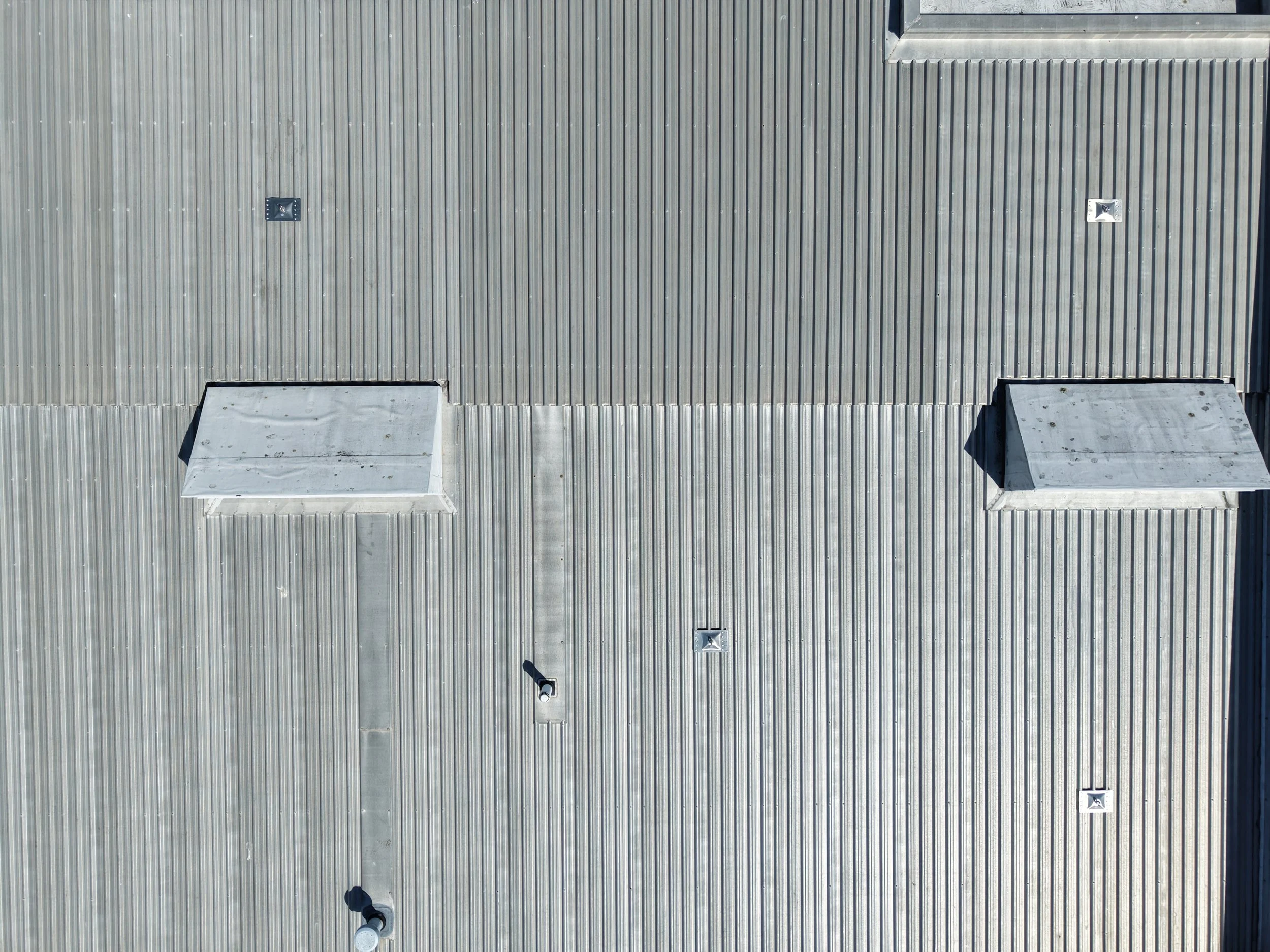
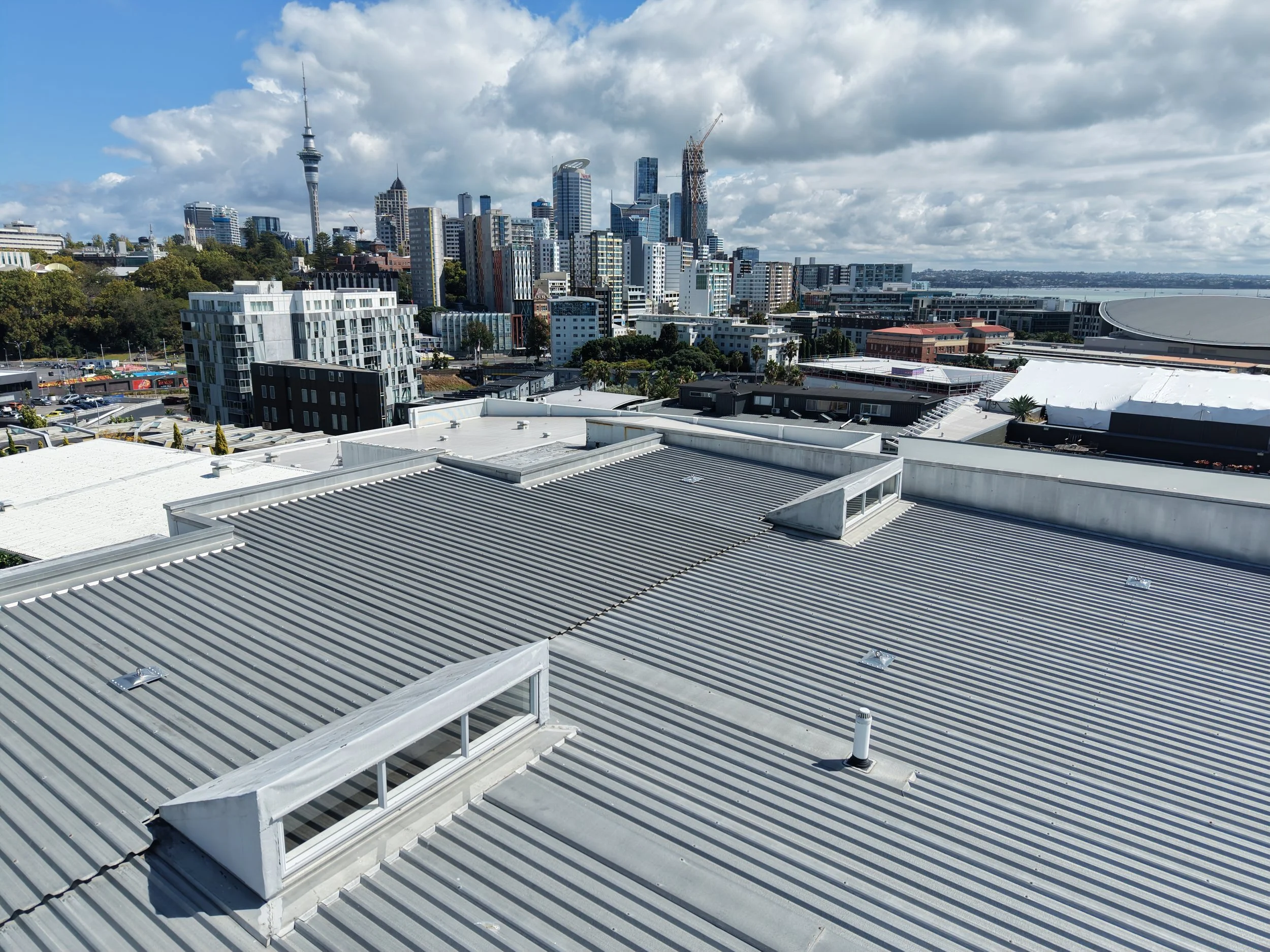
Each building requires its own access strategy. The layout of the roof structure, plant equipment, parapets, and fall exposures all influence how a safe rope access system should be installed.
These systems allow technicians to move safely across roofs and descend building elevations using controlled rope access techniques.
Why Access Planning Matters
Good maintenance begins with good access.
Before installation begins, the team reviews roof structures, fall exposures, and the most practical working routes technicians will use in the future. Task analysis planning, tool control, and exclusion areas below are all part of that process.
When anchors are installed properly, technicians can move efficiently across the roof, manage their ropes safely, and complete inspections or maintenance without unnecessary disruption to building occupants below.
Access systems are not simply about compliance. They are about making sure technicians can carry out meaningful inspections and maintenance work safely and efficiently.
Supporting Long Term Building Maintenance
Buildings are constantly exposed to weather, temperature shifts, and environmental conditions.
Over time, surfaces, joints, fixings, and facade elements naturally experience wear. Having permanent rope access systems in place means technicians can return periodically to inspect and maintain these areas before small issues develop into larger problems.
Regular access allows technicians to remain familiar with the building and understand how it behaves over time.
For property managers and building owners, this makes long term maintenance planning far easier and more predictable.
Why Rope Access Works Well in Auckland
Many buildings across Auckland are well suited to rope access maintenance.
Industrial rope access allows technicians to reach specific areas of a building quickly and precisely without the need for large scaffold structures or heavy access equipment.
Setup times are efficient, disruption to tenants is minimal, and technicians can work directly on the sections of the building that require attention.
For occupied buildings, this method allows maintenance work to take place with very little interruption to normal building operations.
Planning Ahead for Safe Access
When a building has proper roof anchor systems installed, maintenance becomes far easier to plan.
Inspections can be carried out regularly, cleaning and facade upkeep become straightforward, and technicians can safely reach areas that would otherwise be difficult to access.
Over time, this type of planning helps buildings remain well maintained while controlling long term costs and disruption.
The real question many property managers begin asking is simple.
If a building needs to be maintained over the next twenty or thirty years, is the right access system already in place to support that work safely?